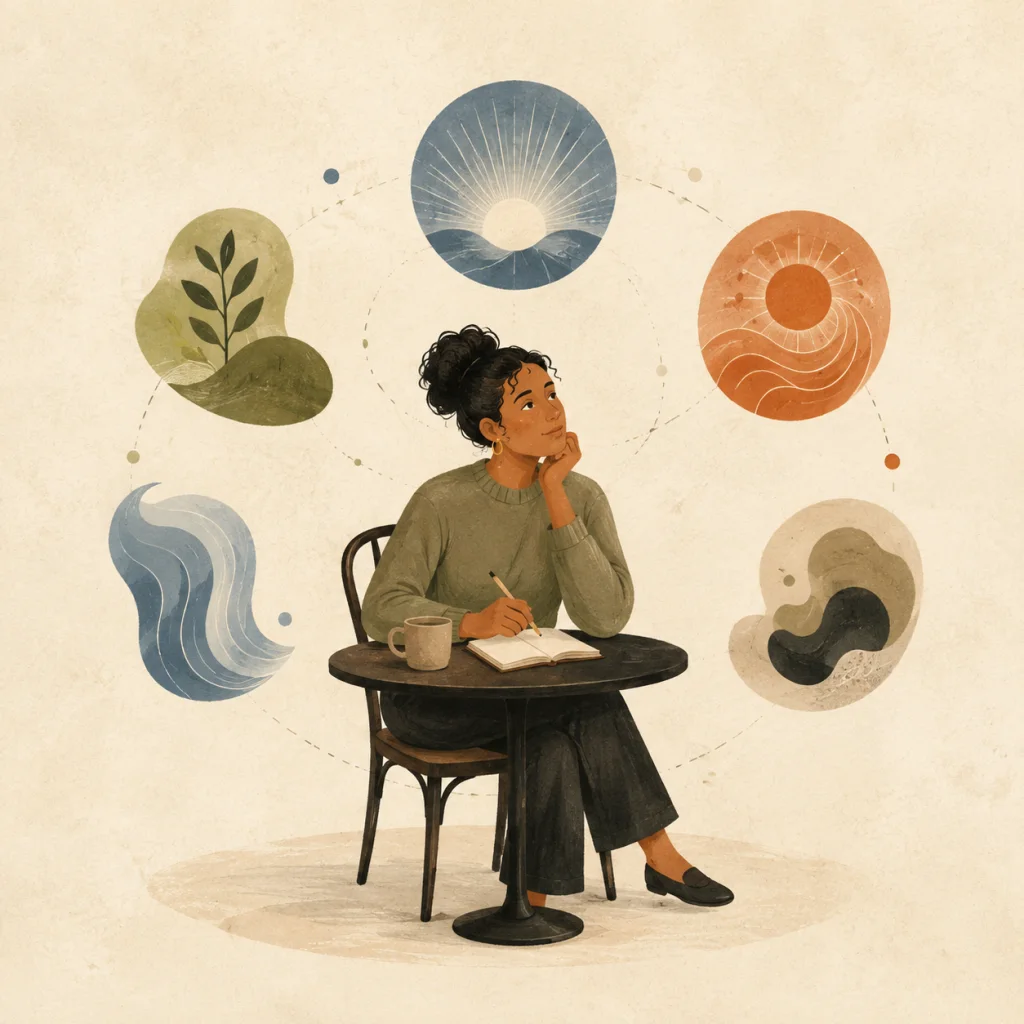
Personality, Stress, and Emotional Regulation: A Practical Guide

Two people can face the same deadline and have very different stress responses. Personality is one possible influence: it can affect which situations feel demanding, what thoughts arrive first, and which coping strategies feel natural. It is not the whole story. Workload, relationships, sleep, money, health, past experiences, and available support all matter.
Emotional reactivity is a tendency, not a diagnosis
In Big Five research, neuroticism refers to a tendency to experience negative emotions such as worry, frustration, sadness, or self-doubt more readily or intensely. A higher score does not mean someone has an anxiety disorder or cannot cope. A lower score does not mean someone never struggles.
Think of a trait score as a weather pattern, not a forecast for every day. It can help you notice recurring conditions, but it does not decide what you do next.
Build a short regulation sequence
When stress spikes, complex advice is hard to use. A brief sequence is easier to remember:
- Name the experience. Try “I am feeling tense and rushed,” rather than “Everything is a disaster.”
- Create a pause. Take a slower breath, place both feet on the floor, get a glass of water, or step away from the screen briefly.
- Choose the next useful action. Send one clarifying message, make a two-item list, or schedule time to return to the problem.
The goal is not to suppress emotion. It is to make room for it without letting the first surge make every decision.
Design support before the difficult moment
If uncertainty is stressful, ask for clear expectations early. If you tend to ruminate, set a time-limited review and then change activity. If isolation makes a problem grow, identify a trusted person you can contact. If you react quickly in conflict, use a pre-agreed pause and return time.
These supports are skills and environmental choices, not signs of weakness. They can benefit people at any point on a personality scale.
When to seek additional help
Consider reaching out to a licensed mental health professional or a healthcare provider if distress is persistent, worsening, interfering with daily life, or accompanied by thoughts of self-harm. In an immediate emergency, contact local emergency services or a crisis line in your country. A personality test is never a substitute for assessment or care.
Read how to interpret personality test results and personality and relationship communication for connected, non-clinical perspectives.
Use a result as a prompt, not treatment
If you take the Big Five test, use any pattern you notice to prepare a support plan for ordinary stressors: a clearer next step, a break, or a trusted person to contact. A score cannot tell you what care you need. Persistent or severe distress deserves support from a qualified professional.